Water Tips
Salt Bridge in Your Softener's Brine Tank: How to Spot It
If your softener's salt level never seems to drop and hard water signs are back, a salt bridge may be the reason. Here's what it is, how to check safely, and how to prevent one.
Key takeaways
- A salt bridge is a hard crust of salt that forms across the brine tank, leaving an empty gap above the water.
- The softener can't make brine through the gap, so it stops softening even though the tank looks full.
- Signs: salt level that never drops, hard water signs coming back, and a hollow feel when you press the salt.
- Prevent it by not overfilling, using clean evaporated pellets, and keeping the lid on.
Here's a puzzle we see often: the brine tank looks full of salt, the softener is running, but spots and scale are back. One common culprit is a salt bridge.
What a salt bridge is
Over time, salt near the water line can dissolve and re-harden into a solid crust that spans the tank like a lid. Below it is an empty air gap; above it is a tank that looks full. Because the salt on top isn't touching the water, the softener can't make the brine it needs to regenerate its resin. (Here's what regeneration is.)
Signs you might have one
- The salt level hasn't gone down in weeks or months.
- Hard water signs are back: spots on glasses, soap that won't lather, crust on fixtures.
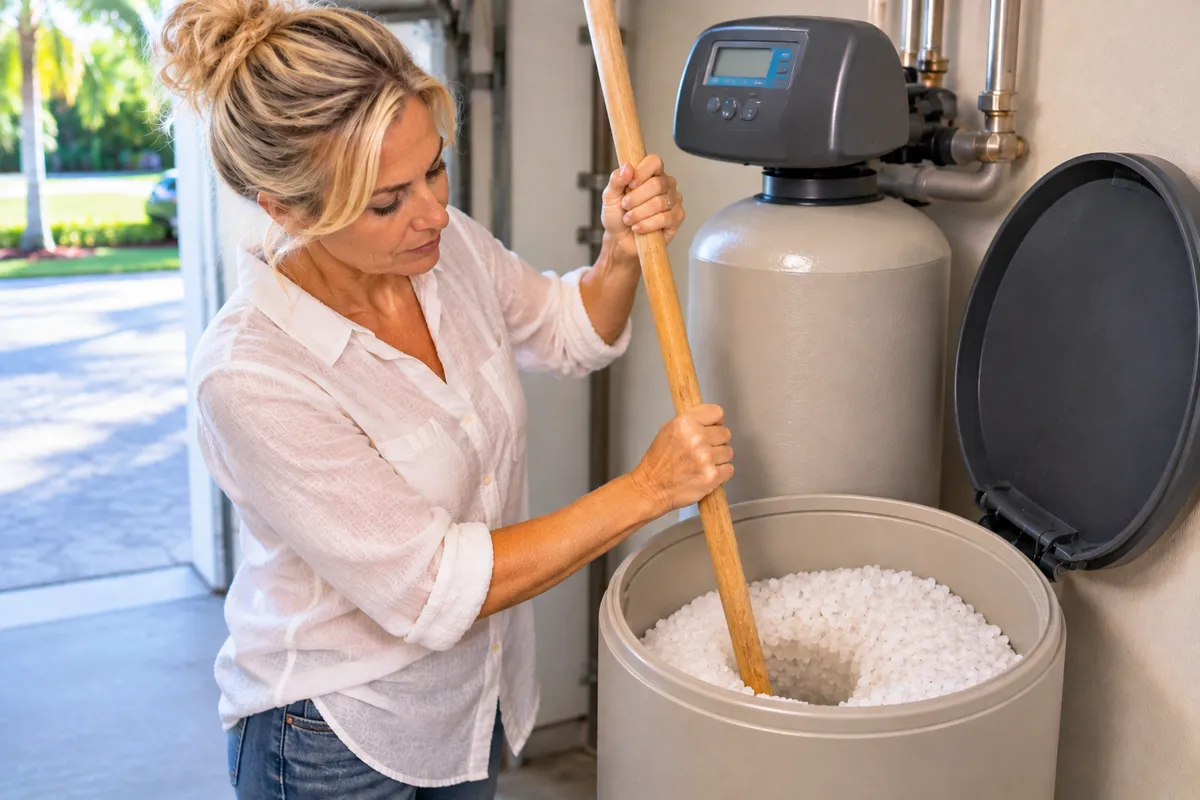
- When you press down on the salt with a broom handle, it feels solid and hollow instead of loose.
Also run through our quick softener checks, since other issues cause similar symptoms.
How to check safely
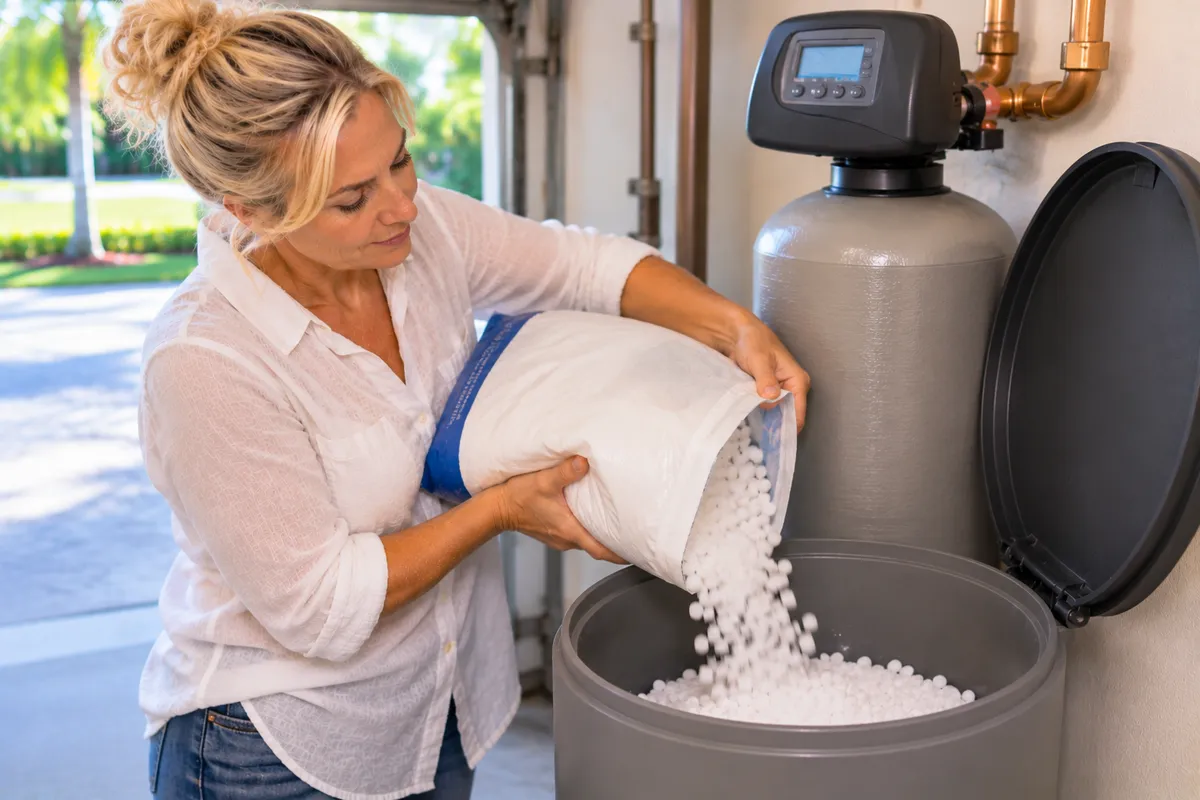
Lift the brine tank lid and gently push down on the salt with the handle end of a broom. Loose salt shifts; a bridge feels like a hard shelf. Be gentle so you don't crack the tank or knock anything loose inside. Don't use anything sharp or metal.
If you find a bridge, your softener company can break it up and clean the tank properly. Please don't change the control valve settings to "fix" it. The settings are matched to your water, and the issue is in the tank, not the programming.
What causes salt bridges
- Overfilling. Packing the tank to the top is one of the most common causes.
- Humidity. Moist air, common in Florida garages, helps salt cake and re-harden.
- Lower-purity salt with more insoluble material.
How to prevent one
- Don't overfill. Keep salt comfortably above the water line, not to the brim.
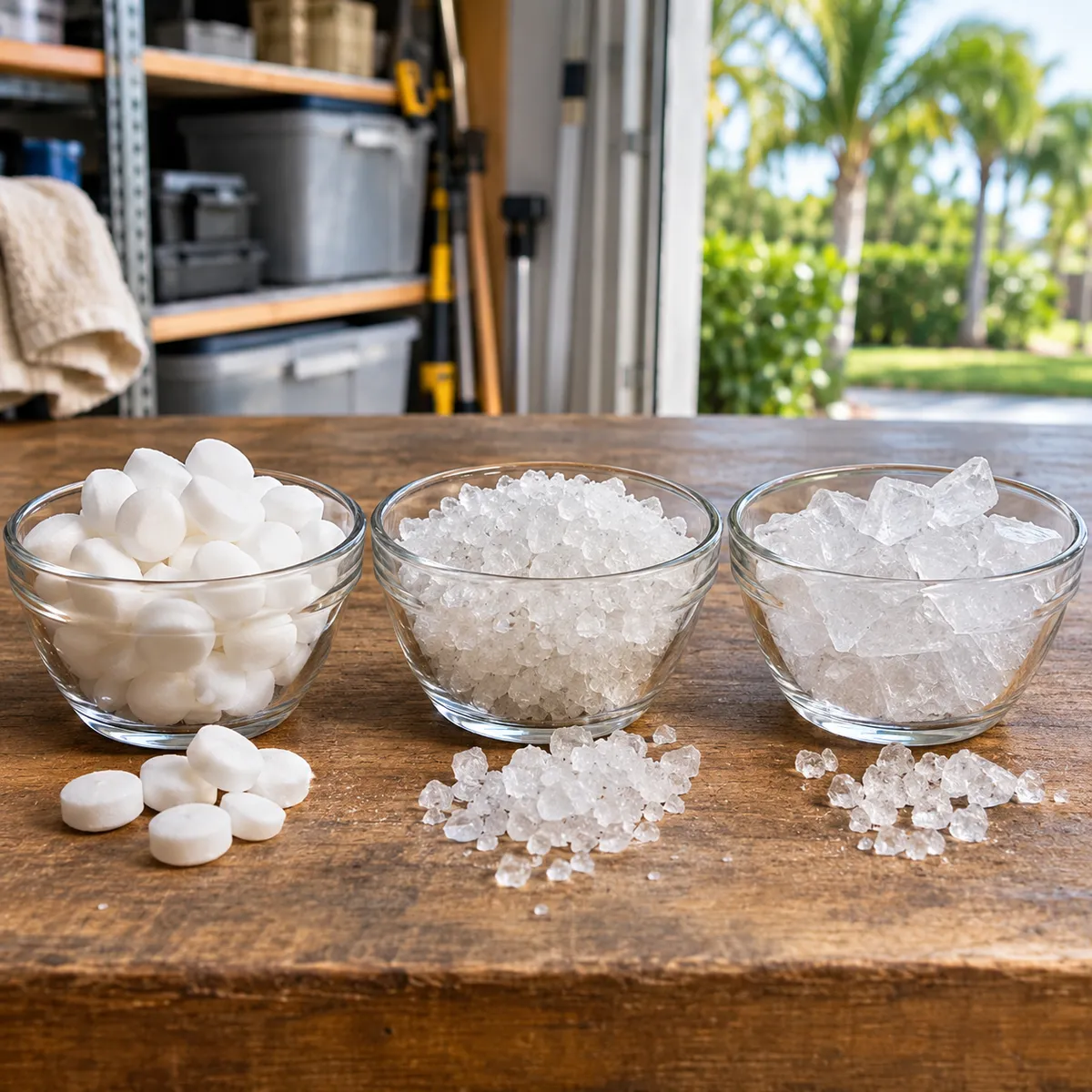
- Use evaporated salt pellets. We recommend them because they're over 99% pure. See pellets vs crystals vs potassium.
- Keep the lid closed to limit humidity.
- Check monthly and give the salt a gentle poke while you're there.
Need a hand? Call or text (727) 334-0333 anytime. Curious about your water itself? Book a free in-home water test; it checks your raw tap water.
Frequently asked questions
Why isn't my water softener using salt?
A salt bridge is a common reason: a hard crust forms above the water, so the softener can't make brine. Other mechanical issues can cause it too, so have it checked.
How do I know if I have a salt bridge?
Gently press on the salt with a broom handle. If it feels like a solid, hollow shelf instead of loose salt, it's likely a bridge.
How do I prevent salt bridges?
Don't overfill the tank, use high-purity evaporated salt pellets, keep the lid closed and check monthly.
Sources
- Home Water Softening, Minnesota Department of Health
- Water Softening (Agdex 716-D32), Alberta Agriculture
We check local facts against official sources such as utility water quality reports and government notices. Spot something out of date? Text us at (727) 334-0333 and we'll fix it.