Water Tips
How Much Salt Does a Water Softener Use?
Salt use depends on your water's hardness, your household's water use and how the softener is set. Here's how to estimate it, why efficient settings matter, and signs your salt use is off.
Key takeaways
- Salt use comes down to how much hardness your softener removes and how much salt it uses per regeneration.
- More hardness and more people mean more regenerations, so more salt.
- Lower salt settings remove more hardness per pound of salt, which is why right-sizing and correct setup matter.
- A sudden jump or a stop in salt use is a sign to have the softener checked.
"How often will I have to add salt?" is a fair question before buying a softener. The honest answer: it depends on your water, your household and the setup. Here's how to think about it in pounds, not guesses.
What drives salt use
- Your hardness. Harder water means more minerals to remove. Tampa's average was about 10.9 grains per gallon in the City of Tampa's 2022 report.
- Your water use. More people and more laundry and showers mean more gallons through the softener.
- Salt per regeneration. Each regeneration uses a set amount of salt, programmed into the control valve.
A rough way to estimate it
A cubic foot of resin can remove roughly 30,000 grains of hardness when regenerated with a full salt dose of about 15 pounds. At lower doses, each pound of salt goes further, but the resin removes less per cycle, so it regenerates more often. That's the trade-off between capacity and efficiency.
Here's a simple example. A family of four at about 10.9 gpg uses roughly 22,900 grains of hardness a week (our softener calculator shows the math). A commonly cited efficient setting is about 6 pounds of salt for roughly 20,000 grains per cubic foot, or about 3,300 grains per pound, compared with about 2,000 grains per pound at a full 15-pound dose. At the efficient rate, that household uses about 7 pounds of salt a week. At the full dose, it would be closer to 11.
Treat that as a ballpark, not a promise. Your real number depends on your water and how your softener is programmed.
Why settings matter
Two softeners in identical homes can use very different amounts of salt because of how they're sized and set. An oversized salt dose wastes salt; too little can let hardness slip through. That's why the control valve should be programmed by the installer for your measured hardness, and why you shouldn't change those settings yourself.
Signs your salt use is off
- Salt use suddenly jumps without a change in your household. It could be a leak, a setting issue or a valve problem.
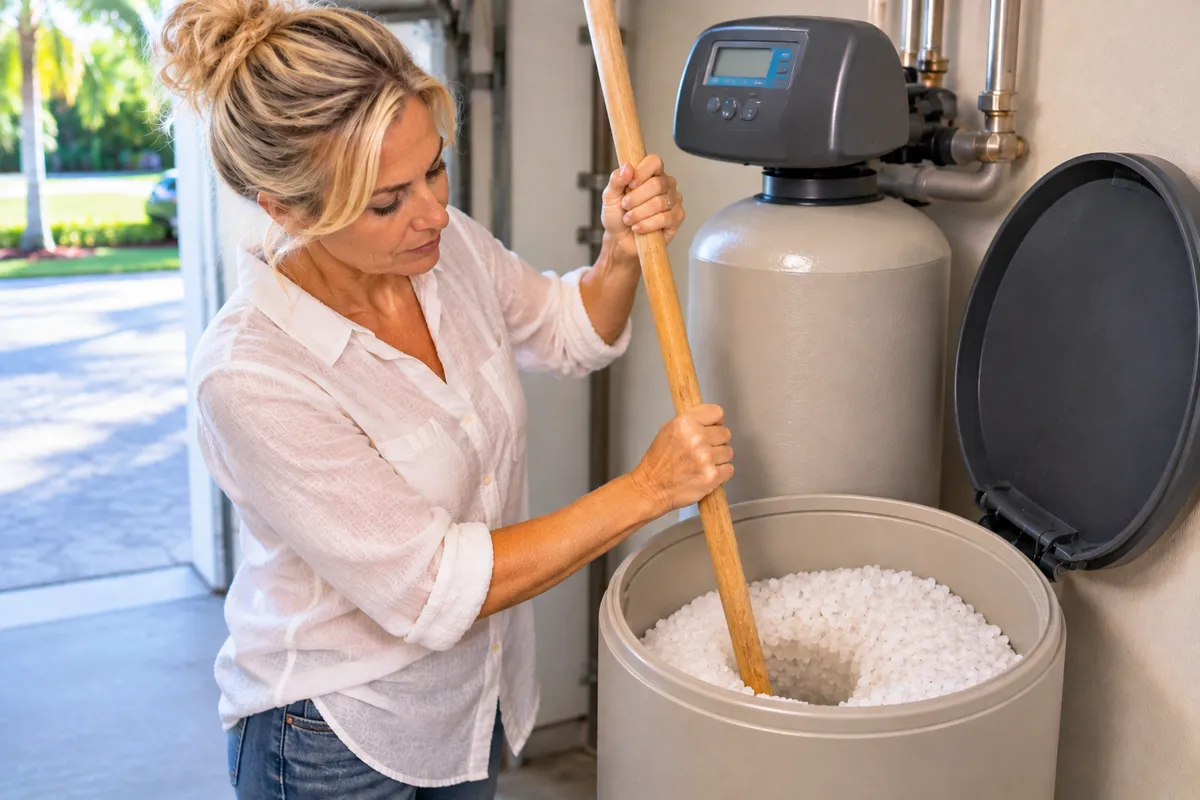
- Salt stops going down at all. That can be a salt bridge or a brine draw problem.
- Hard water signs return even though there's salt in the tank.
Make salt one less thing to think about
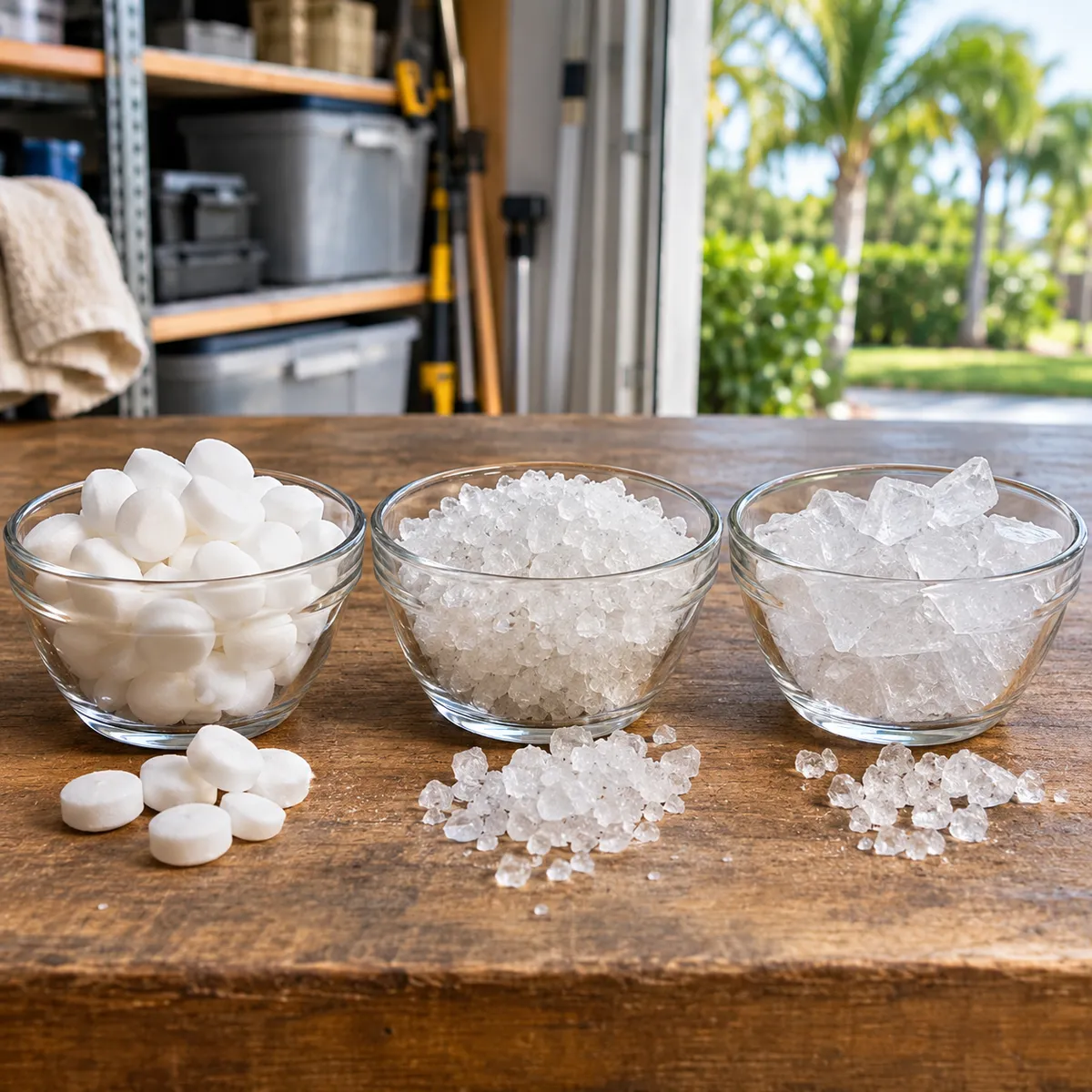
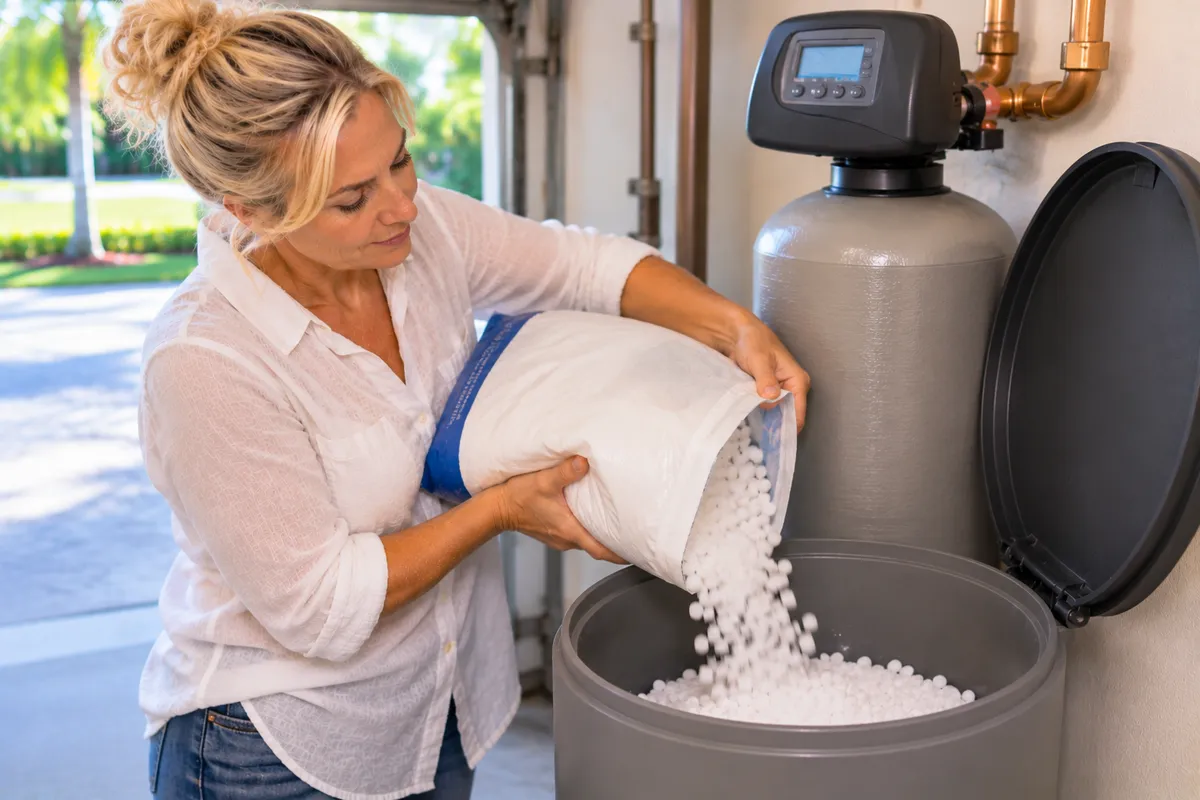
We recommend evaporated salt pellets because they're over 99% pure. FHWS customers can choose salt top-offs every 3, 6, 9 or 12 months: we make sure there's a bag in there, add an extra bag to the brine tank, or if it's full we'll leave you one. Questions? Call or text (727) 334-0333 anytime, or start with a free in-home water test to learn your hardness.
Frequently asked questions
How much salt does a water softener use per month?
It depends on hardness, water use and settings. As a rough example, a family of four at about 10.9 grains per gallon with an efficient setting might use about 7 pounds a week. Your real number depends on your setup.
Why is my softener using so much salt?
Common reasons include higher water use, a leak, a salt setting that's too high or a valve problem. Have the installer check it rather than changing settings yourself.
What salt should I use?
We recommend evaporated salt pellets because they're over 99% pure, which leaves less residue in the brine tank.
Sources
- Water Softening (Agdex 716-D32), Alberta Agriculture
- Technical Bulletin TB4-006 (ion exchange regeneration and salt use), Solenis
- 2022 Water Quality Report, City of Tampa Water Department
We check local facts against official sources such as utility water quality reports and government notices. Spot something out of date? Text us at (727) 334-0333 and we'll fix it.