Water Tips
What Is TDS in Water? A Plain-English Guide to Total Dissolved Solids
TDS stands for total dissolved solids, the minerals and salts dissolved in your water. Learn what the number means, what the EPA guideline is, and what a TDS meter can and can't tell you.

Key takeaways
- TDS means total dissolved solids: the minerals, salts and other substances dissolved in water.
- The EPA's non-mandatory guideline for TDS is 500 mg/L, based on things you can notice like hardness, deposits, staining and a salty taste.
- Handheld TDS meters estimate dissolved solids from electrical conductivity. They give one number but can't tell you what is dissolved.
- TDS is a useful clue, not a full picture; pair it with hardness, pH and chlorine readings.
Maybe a neighbor showed you a little pen-shaped meter and a number on its screen. Maybe you saw "TDS" on a filter box at the hardware store. Either way, you're wondering what it means and whether your number is good or bad. Here's a plain-English guide.
What TDS means
TDS stands for total dissolved solids. North Dakota State University Extension puts it simply: water always contains some dissolved minerals, and these are commonly referred to as total dissolved solids. Think of things like calcium, magnesium, sodium, chloride and sulfate. You can't see them in a clear glass, but they're there, and they affect how water tastes, feels and behaves in your home.
TDS is usually reported in milligrams per liter (mg/L), which is about the same as parts per million (ppm).
What the EPA says about TDS
The U.S. Environmental Protection Agency includes TDS in its secondary drinking water standards. These are non-mandatory guidelines set mainly for aesthetic reasons, such as taste, color and odor. They're different from the enforceable health-based limits that utilities must meet.
The EPA's secondary guideline for TDS is 500 mg/L. The noticeable effects it lists for higher levels are:
- Hardness
- Deposits
- Colored water
- Staining
- Salty taste
The EPA also has separate secondary guidelines for some of the individual pieces that make up TDS, such as chloride (250 mg/L, salty taste) and sulfate (250 mg/L, salty taste).
How TDS relates to hard water
Hardness and TDS overlap, but they're not the same thing. Hardness measures mainly calcium and magnesium. TDS counts those plus everything else dissolved in the water. The U.S. Geological Survey notes that hardness comes from compounds of calcium and magnesium, and that hardness is not a health concern but can be a nuisance. So a high TDS reading often goes along with spotty glasses and scale, but it doesn't tell you the hardness on its own. Our guide to testing water hardness at home covers that separate measurement.
How a TDS meter works
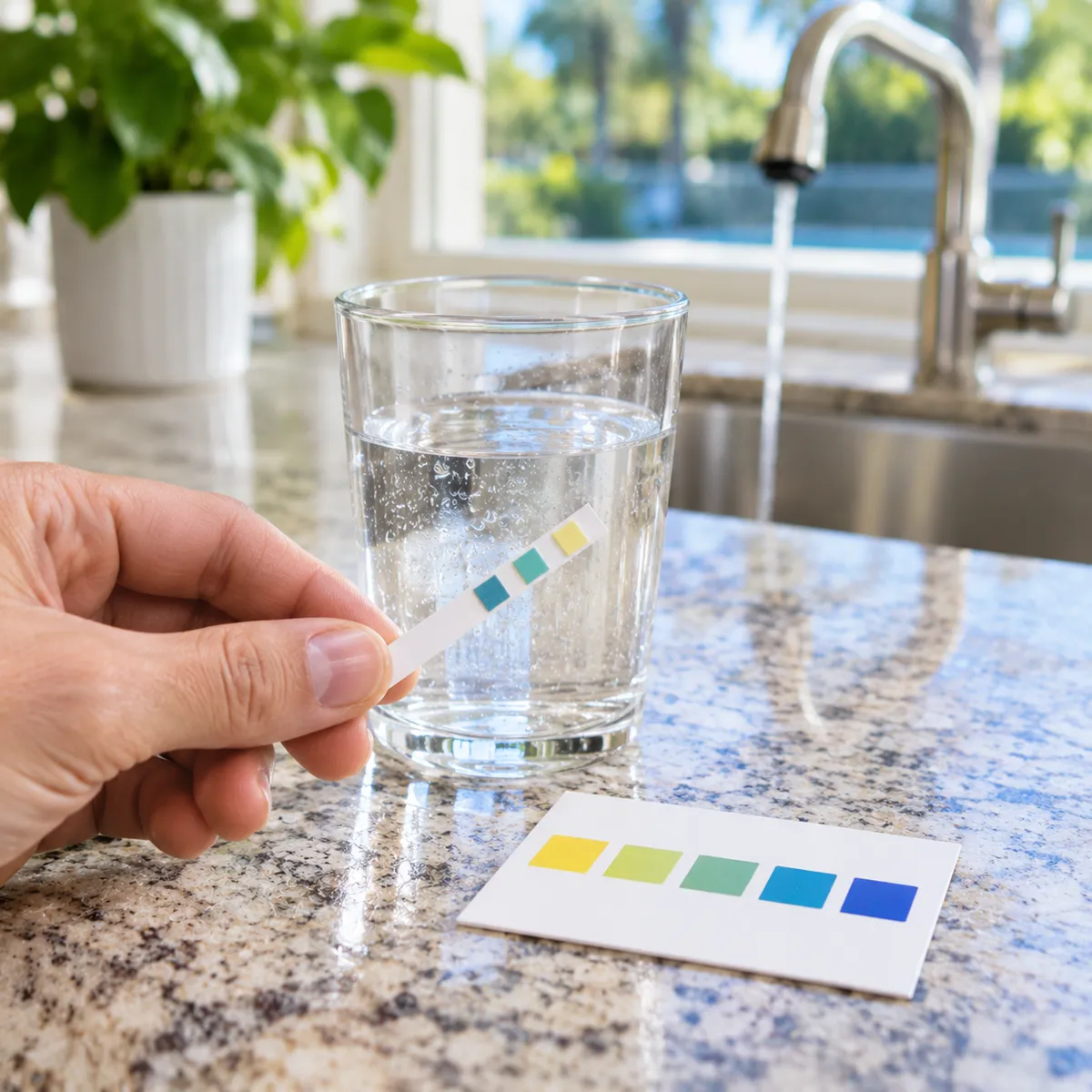
Most home TDS meters don't actually weigh anything. NDSU Extension explains that the dissolved minerals in water are what conduct electricity, so a meter measures electrical conductivity and then calculates an estimate of TDS by multiplying that reading by a conversion factor. NDSU also notes that meters must be calibrated regularly to stay accurate, and that the laboratory method (evaporating a sample and weighing what's left) is the standard.
What a TDS number can't tell you
A TDS meter is a handy screening tool, but it has real limits:
- It doesn't say what is dissolved. A reading of 300 could be mostly calcium or mostly sodium. The meter can't tell the difference.
- It doesn't measure chlorine or chloramine. These disinfectants are used in many Tampa Bay utilities, and they need their own test. See our article on chlorine or chloramine in Tampa Bay towns.
- A low number isn't a clean bill of health, and a higher number isn't automatically a health problem. It's one clue among several.
A useful water check looks at several readings together, not just one.
Will a water softener lower TDS?
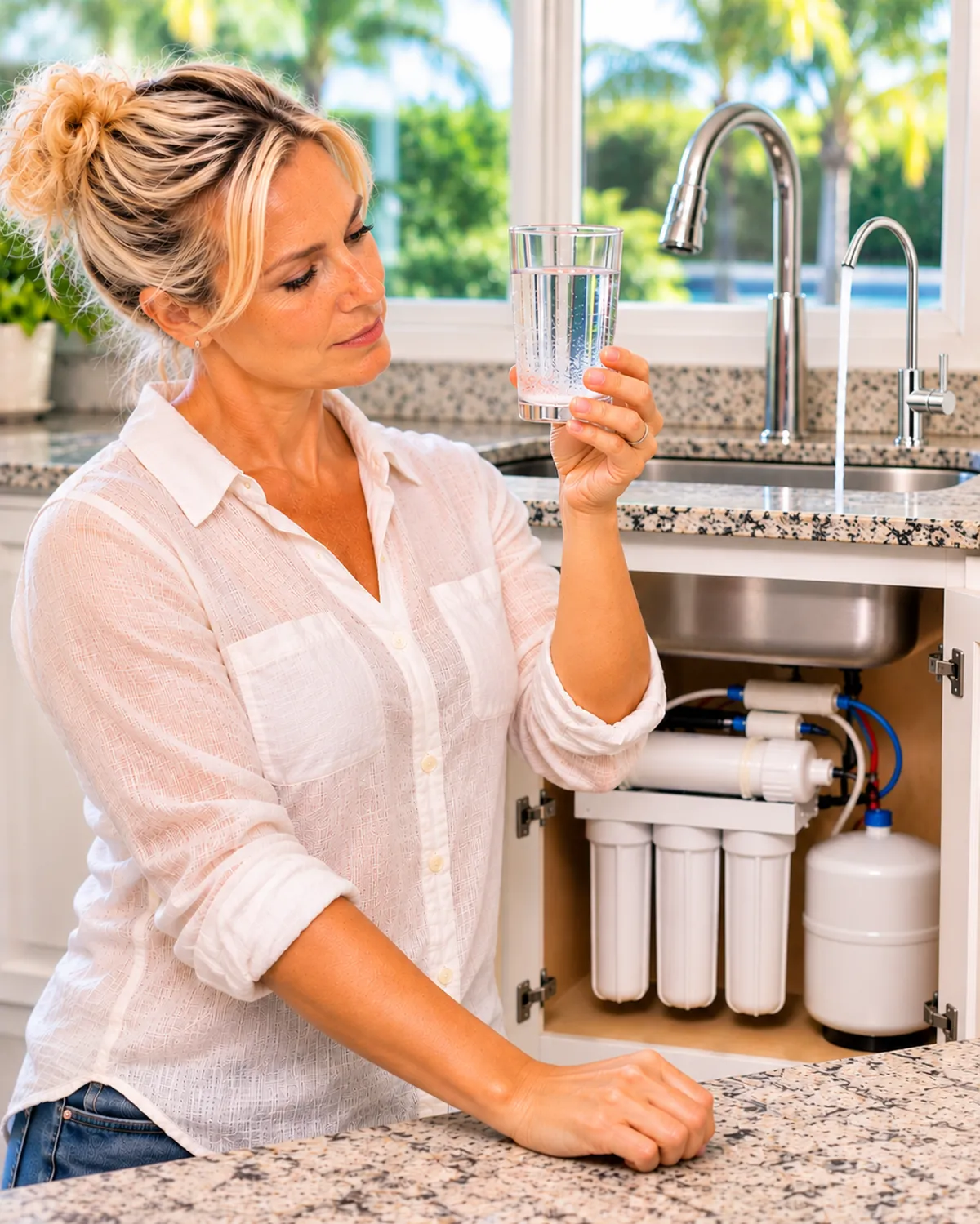
Not much, and that surprises people. A softener swaps hardness minerals for sodium, so the water stops leaving scale and spots, but the total amount of dissolved material stays roughly similar. Reverse osmosis at a kitchen sink is the type of treatment designed to lower dissolved solids in drinking water. If you're weighing that, our article on whether you need reverse osmosis with a softener walks through the difference.
Find out what's in your water
Our free in-home water test checks your raw water for hardness, chlorine or chloramine, pH and dissolved minerals, so you get more than one number and a clear explanation of what each one means. Call or text (727) 334-0333 to set it up, or read more about reverse osmosis drinking water.
Frequently asked questions
What is a good TDS level for drinking water?
The EPA's secondary, non-mandatory guideline for total dissolved solids is 500 mg/L. Above that, people may notice hardness, deposits, staining, colored water or a salty taste.
Is high TDS water unsafe?
Not necessarily. The EPA's TDS guideline is based on taste, color and similar aesthetic effects. A TDS meter can't tell you what is dissolved, so it can't judge safety on its own.
How does a TDS meter work?
It measures how well the water conducts electricity, then estimates TDS using a conversion factor. North Dakota State University Extension notes meters need regular calibration to stay accurate.
Does a water softener reduce TDS?
Not much. A softener exchanges hardness minerals for sodium, so total dissolved solids stay roughly similar. Reverse osmosis is the treatment designed to lower dissolved solids in drinking water.
Sources
- Secondary Drinking Water Standards: Guidance for Nuisance Chemicals, U.S. Environmental Protection Agency
- Using Electrical Conductivity and Total Dissolved Solids Meters to Field Test Water Quality (WQ1923), North Dakota State University Extension
- Hardness of Water, U.S. Geological Survey
We check local facts against official sources such as utility water quality reports and government notices. Spot something out of date? Text us at (727) 334-0333 and we'll fix it.