Buying Guides
Do I Need Reverse Osmosis If I Have a Water Softener?
A softener and a reverse osmosis system do different jobs. Here's what each one does, why they're often paired, and how to decide whether RO at your kitchen sink is worth it.
Key takeaways
- A softener treats the whole house for hardness. Reverse osmosis (RO) treats drinking water at one tap.
- RO is designed to reduce dissolved minerals and salts, including sodium, which makes it a common pairing with a softener.
- RO has limits, like every treatment. Check each system's specific certified claims.
- If your drinking water tastes fine and you're not watching sodium, RO is a nice-to-have, not a must.
Once a softener is in, many people wonder whether they also need one of those under-sink reverse osmosis systems. Sometimes yes, sometimes no. Here's how to think it through.
Two different jobs
| Water softener | Reverse osmosis | |
|---|---|---|
| Where | Whole house | Usually one kitchen tap |
| Main job | Removes calcium and magnesium (hardness) | Reduces dissolved minerals and salts in drinking water |
| Protects | Pipes, fixtures, water heater, appliances | What you drink and cook with |
How reverse osmosis works
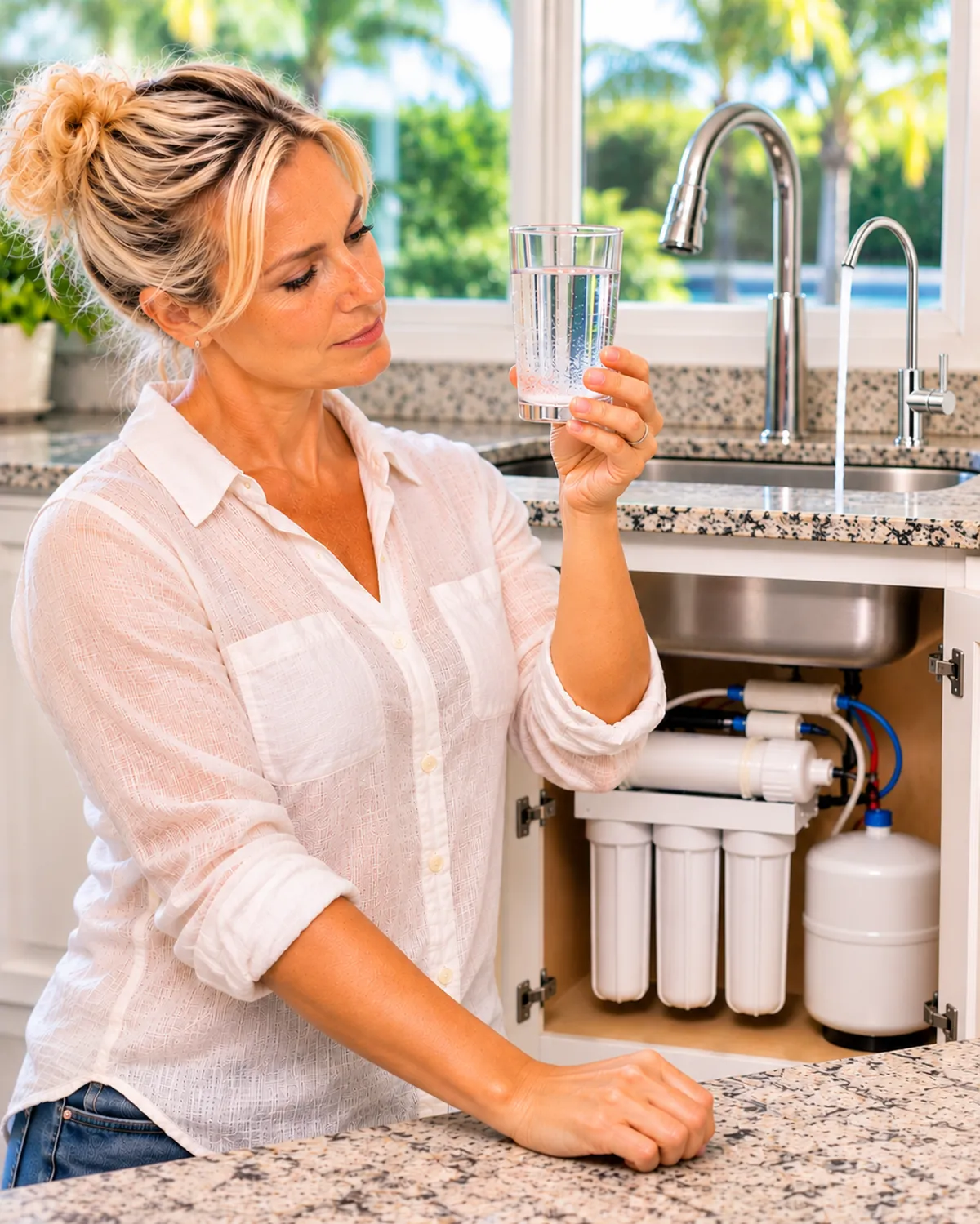
RO pushes water through a very fine membrane that holds back most dissolved substances. Health department guidance describes RO systems as reducing common dissolved chemicals like sodium and chloride, and some metals such as copper and lead, depending on the system. Most home units also include carbon stages before and after the membrane for taste and odor.
University extension guidance is clear that RO has limits; for example, home RO isn't designed to remove dissolved gases. Every treatment has limits, which is why you should check a system's specific certified claims.
Why RO and softeners are often paired
- Sodium. A softener adds a small amount of sodium, about 8 mg/L per grain of hardness removed. RO reduces it in drinking water. See is softened water safe to drink.
- The membrane lasts better. Softened water is easier on an RO membrane than hard water, which can scale it.
- Taste. Many people simply like the taste of RO water for drinking, coffee and ice.
When RO probably isn't necessary
If you like how your water tastes, you're not on a sodium-restricted diet, and you don't have a specific contaminant you're trying to reduce, RO is optional. A good carbon filter may cover taste. See pitcher vs under-sink vs whole-home filters.
Things to check before buying RO
- Certified claims for the specific model, not just the brand.
- Space under the sink and a spot for the faucet.
- Filter and membrane replacement schedule and cost.
- Test your water first, and test again after installing, as health departments recommend.
We offer reverse osmosis drinking water systems, and we'll tell you honestly if you don't need one. Start with a free in-home water test, or call or text (727) 334-0333 anytime.
Frequently asked questions
Do I need reverse osmosis if I have a softener?
Not always. RO is a common pairing if you want less sodium and dissolved minerals in drinking water or prefer the taste. If you like your water and aren't watching sodium, it's optional.
Does reverse osmosis remove sodium from softened water?
RO is designed to reduce dissolved salts including sodium. Check the specific model's certified claims.
Is RO a cure-all for drinking water?
No. RO reduces many dissolved substances, but home units aren't designed for things like dissolved gases. Every treatment has limits.
Sources
- Home Water Treatment Options, Dakota County, Minnesota
- Have Water Tested First, University of Nevada, Reno Extension
- Water Softening (Ion Exchange), WQ1031, North Dakota State University Extension
We check local facts against official sources such as utility water quality reports and government notices. Spot something out of date? Text us at (727) 334-0333 and we'll fix it.