Water Tips
How to Remove Hard Water Spots From Shower Glass (and Keep Them Off)
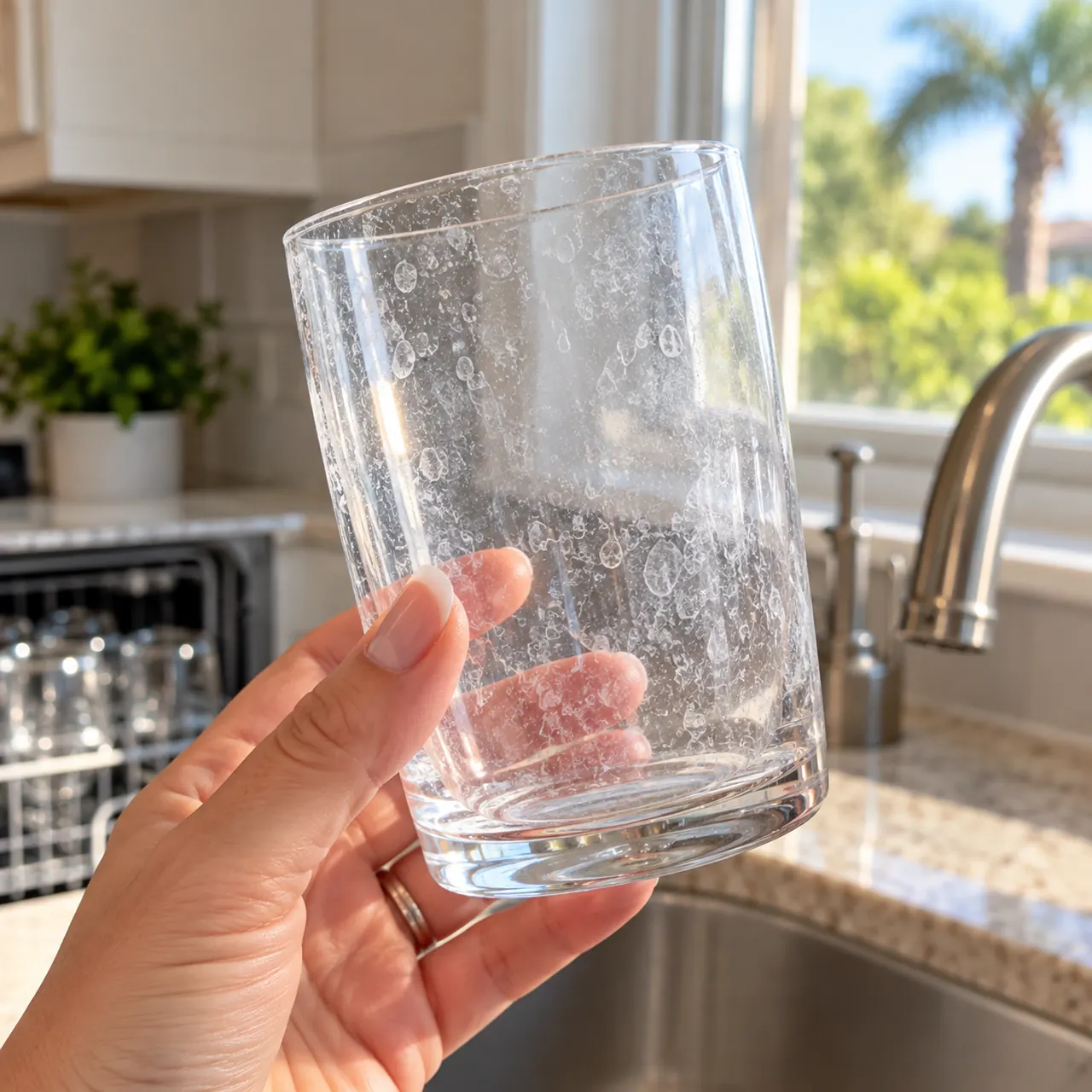
White spots and haze on shower glass are mineral deposits from hard water. Here's a simple vinegar method that works, what to avoid, and how to keep the glass clear between cleanings.
Key takeaways
- White spots and cloudy haze on shower glass are usually calcium and magnesium left behind when hard water dries.
- Warm white vinegar, a few minutes of dwell time and a non-scratch pad remove most fresh spots.
- A squeegee after every shower is the cheapest way to keep spots from coming back.
- If spots return within days, your water's hardness is the root cause, and a softener addresses it at the source.
You clean the shower glass on Saturday, and by Wednesday it's spotted again. If that sounds familiar, you're seeing hard water at work. Much of Tampa Bay's water is hard to very hard. (The City of Tampa's 2022 report listed an average of about 10.9 grains per gallon.) When drops dry on glass, the water leaves and the minerals stay.
What you'll need
- Plain white vinegar
- A spray bottle
- A non-scratch scrub pad or microfiber cloth
- Dish soap (a few drops)
- A squeegee
Step by step: the vinegar method
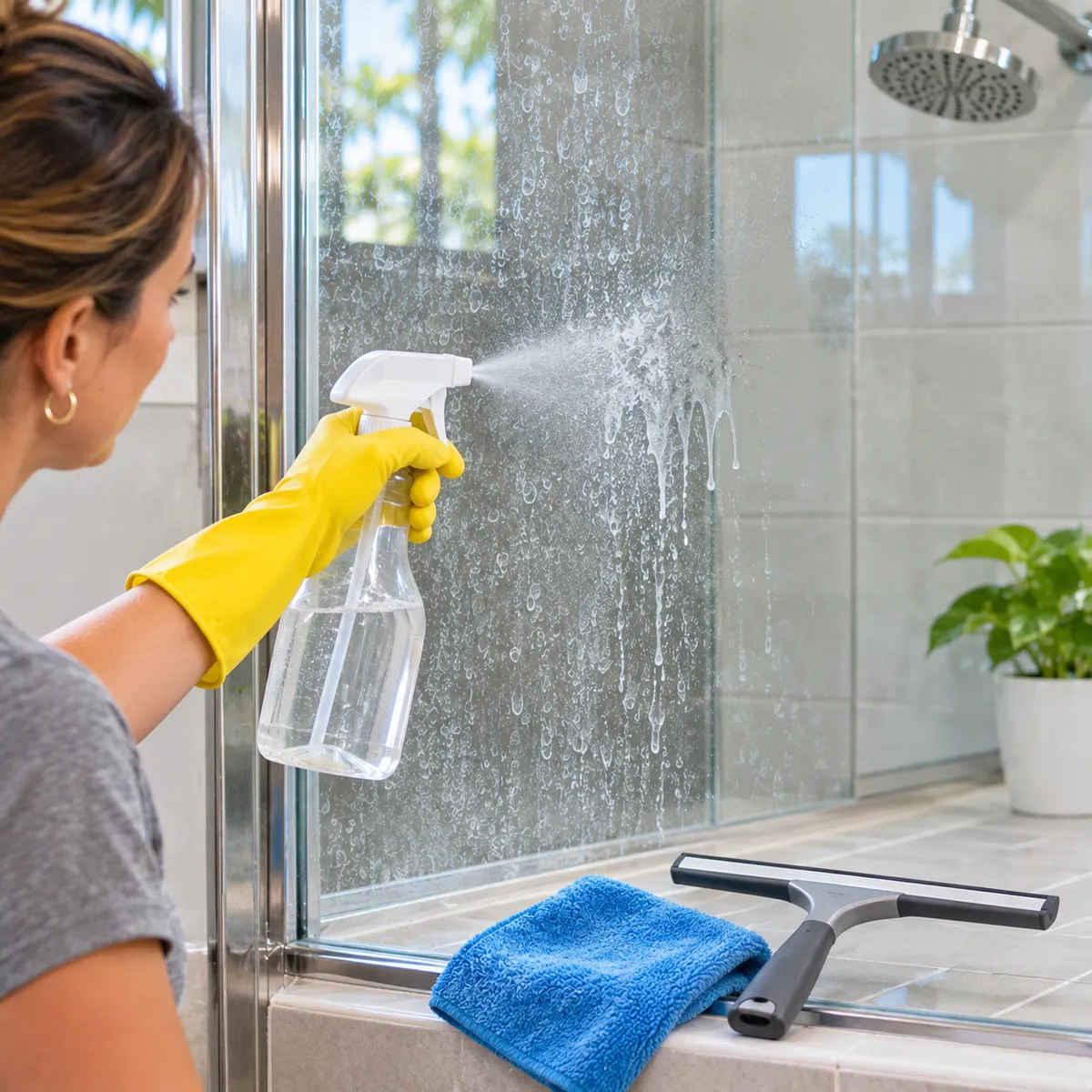
- Warm the vinegar. Warm vinegar works faster on mineral deposits. Warm it briefly (don't boil it) and pour it into a spray bottle with a few drops of dish soap, which helps it cling.
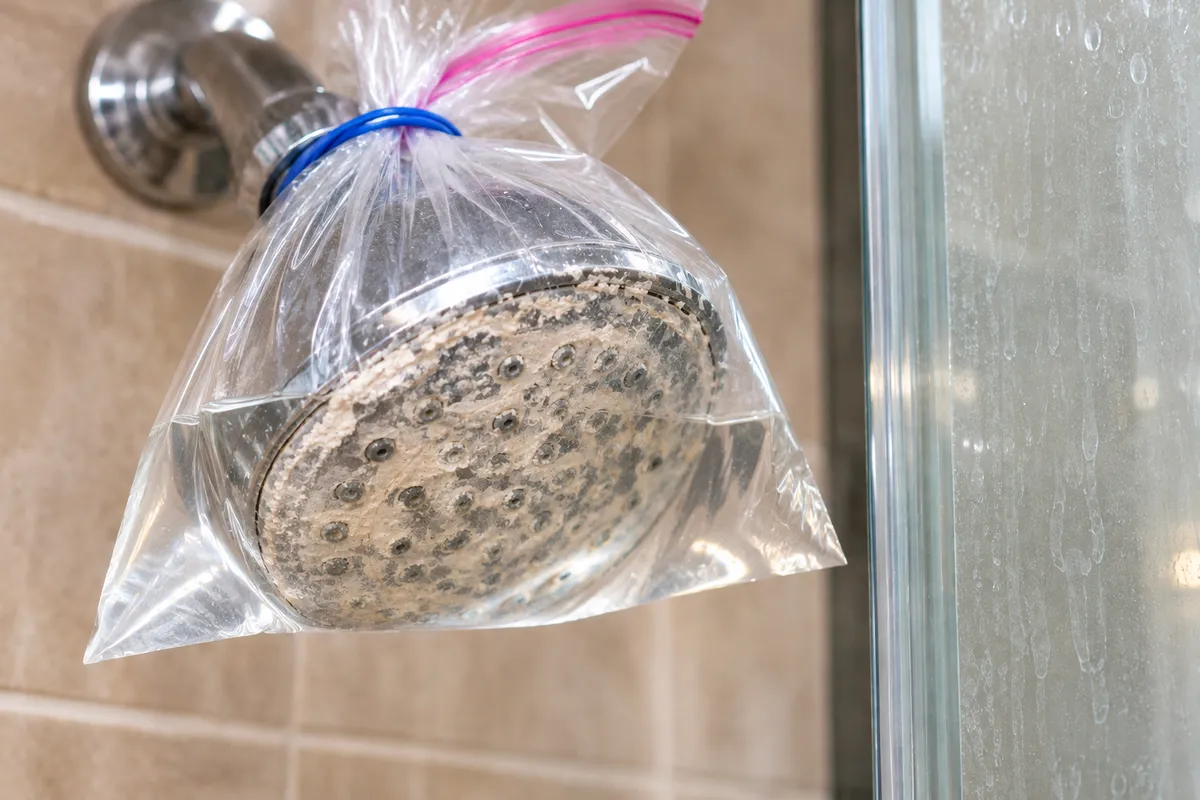
- Spray and wait. Soak the glass and let it sit 10 to 15 minutes. On heavy buildup, lay vinegar-soaked paper towels on the worst spots so they stay wet.
- Scrub gently. Use a non-scratch pad in small circles. Avoid steel wool and abrasive powders, which can scratch glass and coatings.
- Rinse and dry. Rinse with warm water and squeegee or towel the glass dry. Drying is what stops new spots.
Check your shower door's care guide first. Some glass has a factory coating that the manufacturer wants cleaned only with mild products. Keep vinegar off natural stone like marble and travertine, which acid can etch.
When vinegar isn't enough
Haze that's been building for years can be harder to lift. Repeat the soak a couple of times before reaching for anything stronger. If the glass stays cloudy after the minerals are gone, the surface itself may be etched, which cleaning can't reverse.
How to keep spots from coming back
- Squeegee after every shower. Thirty seconds of squeegeeing removes most of the water before minerals can dry.
- Crack the door or run the fan so the glass dries faster.
- Do a quick vinegar spray weekly instead of a big scrub monthly.
Fixing the cause
Cleaning treats the symptom. The minerals are in the water itself. A water softener removes the calcium and magnesium before water reaches your shower, so there's much less left behind to dry into spots. (A salt-free conditioner leaves those minerals in the water; see softener vs salt-free conditioner.)
Want to know how hard your water really is? Our free in-home water test measures it at your tap. Call or text (727) 334-0333 anytime.
Frequently asked questions
What removes hard water stains from shower glass?
White vinegar, warmed and left to soak for 10 to 15 minutes, dissolves most mineral spots. Scrub with a non-scratch pad, rinse and dry the glass.
Why do spots come back so fast?
Hard water leaves calcium and magnesium behind every time drops dry on the glass. Squeegeeing after each shower helps; reducing the water's hardness addresses the cause.
Can vinegar damage my shower?
Vinegar is generally safe on glass, but it can etch natural stone like marble or travertine. Check your shower door's care guide for any coating instructions.
Sources
- Hardness of Water, U.S. Geological Survey
- 2022 Water Quality Report, City of Tampa Water Department
We check local facts against official sources such as utility water quality reports and government notices. Spot something out of date? Text us at (727) 334-0333 and we'll fix it.