Buying Guides
Water Softener vs Salt-Free Conditioner: What's the Difference?
Salt-free conditioners and salt-based softeners both target hard water, but they work in very different ways. Here's what each one does, what it doesn't do, and how to choose.
Key takeaways
- A salt-based softener removes calcium and magnesium through ion exchange, so the water is actually soft.
- A salt-free conditioner doesn't remove hardness. The best-studied type changes minerals into tiny crystals that are less likely to stick as scale.
- Conditioners can reduce scale in pipes and water heaters, but you'll still see spots and soap won't lather like soft water.
- If spots, soap scum and dry-feeling skin are your main complaints, a softener is the tool that addresses them.
"Salt-free water softener" is one of the most searched phrases in water treatment, and one of the most confusing. Strictly speaking, a system that doesn't remove hardness isn't a softener. It's a conditioner. Both have a place. Here's the honest difference.
How a salt-based softener works
A softener is a tank of resin beads. As water flows through, the beads grab calcium and magnesium (the minerals that make water hard) and swap them for sodium or potassium. That's called ion exchange. When the beads are full, the softener rinses them with brine from the salt tank and starts over.
The result is water with the hardness actually taken out. The Minnesota Department of Health describes this as the standard way home softeners work.
How a salt-free conditioner works
Salt-free conditioners don't remove calcium and magnesium. The type with the most independent testing is template assisted crystallization (TAC). Water passes over a special media that turns dissolved hardness into microscopic crystals. Those crystals stay suspended in the water and are less likely to stick to pipes and heating elements as scale.
Other "salt-free" devices, such as magnetic or electronic units clamped to a pipe, have weaker evidence. A university study comparing several technologies found TAC reduced scale more than the others tested, while a separate university thesis found much smaller effects in its test waters. Results depend on the product and the water.
Side by side
| Salt-based softener | Salt-free conditioner (TAC) | |
|---|---|---|
| Removes hardness | Yes | No |
| Reduces scale in pipes and water heater | Yes | Can reduce it |
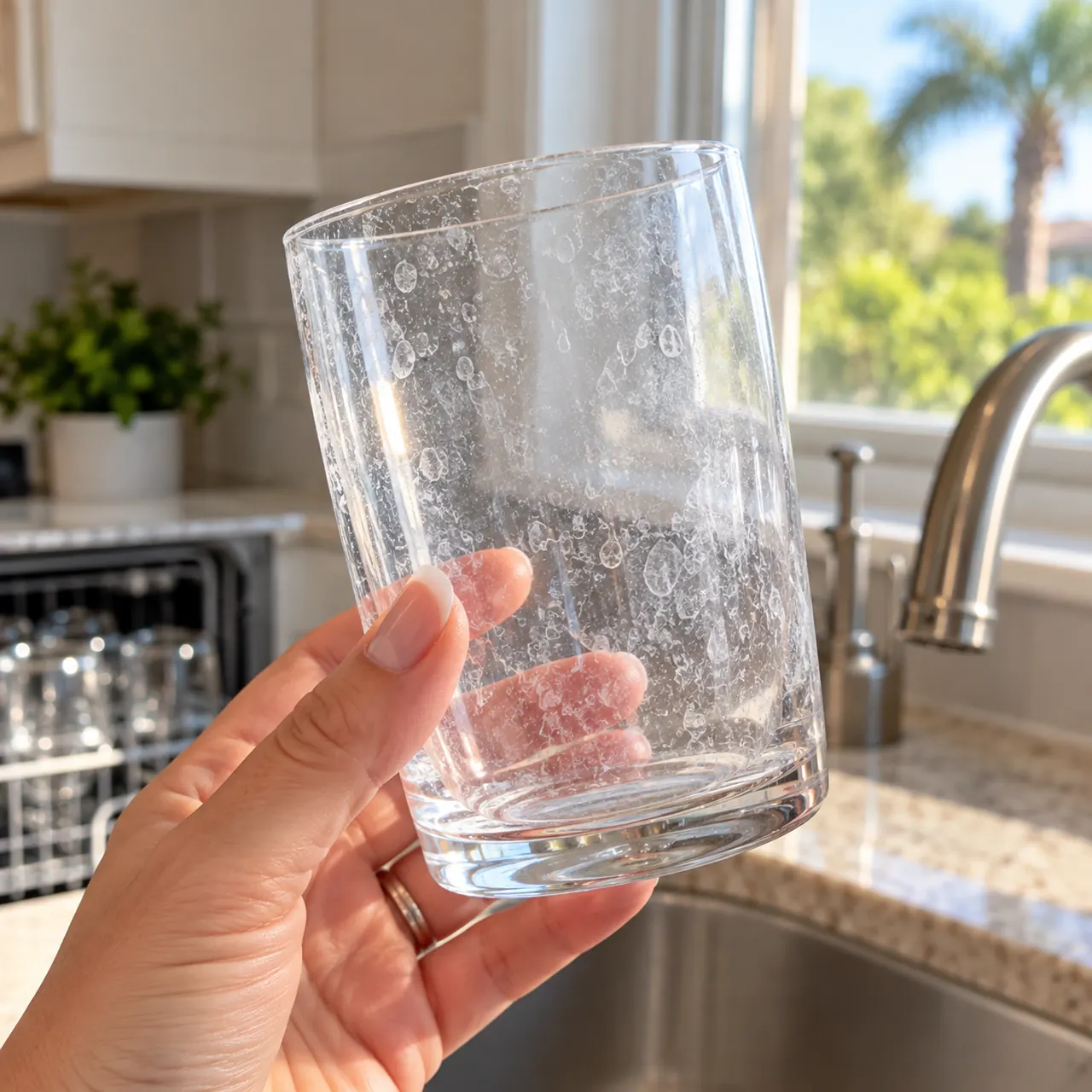
| Fewer spots on glass and dishes | Yes | Little change; minerals are still there |
| Soap and shampoo lather | Noticeably better | About the same as hard water |
| Uses salt | Yes, during regeneration | No |
| Needs a drain | Yes | Usually not |
Which one fits your home?
Ask what's bothering you most.
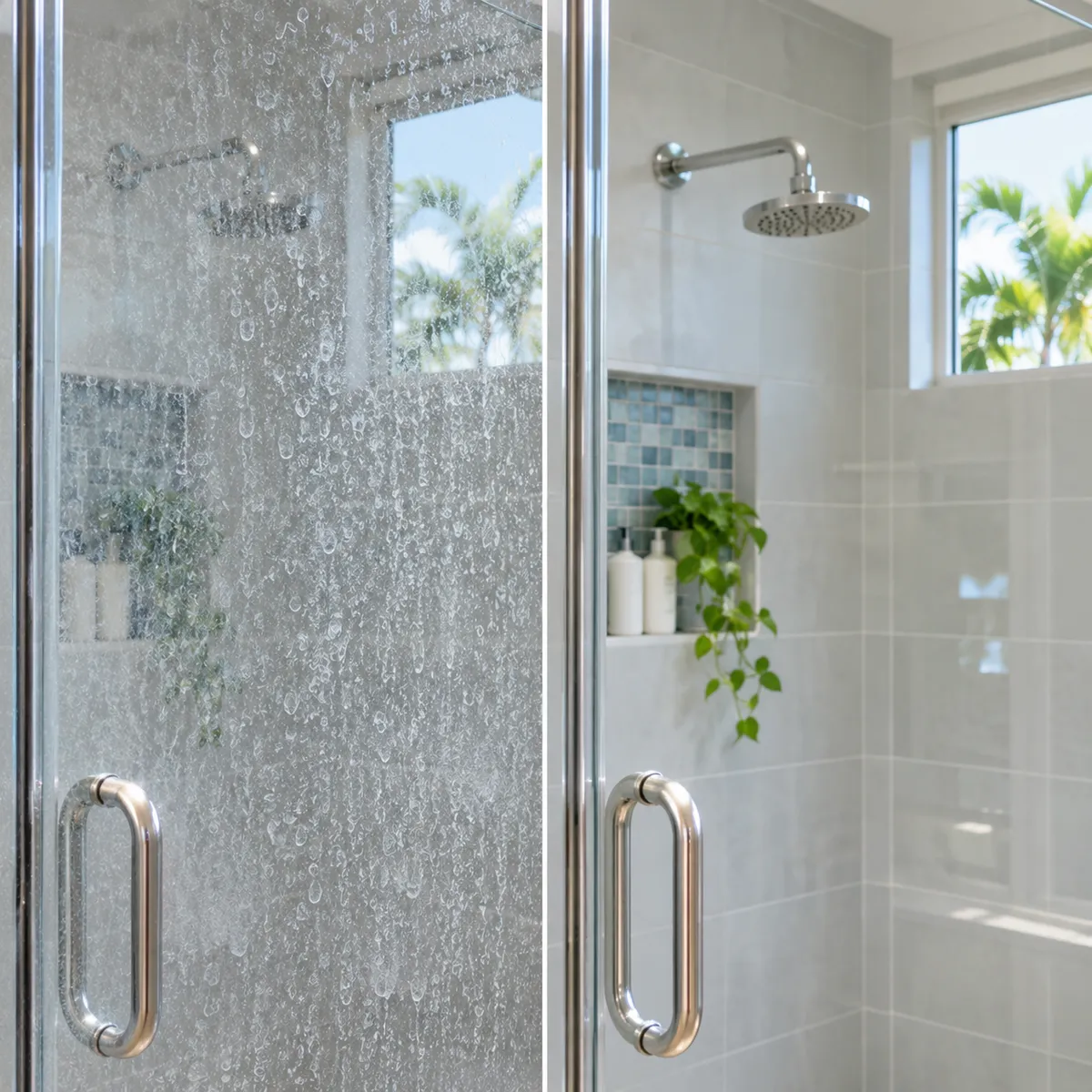
- If it's spots on shower glass and dishes, soap scum, and stiff laundry, those come from minerals that are still in the water. A conditioner leaves them in. A softener takes them out.
- If your only goal is less scale in a water heater and you don't want salt or a drain line, a tested conditioner can be a reasonable choice.
Either way, start with your hardness number. Very hard water can be more than some conditioners are rated for, and iron or manganese can foul conditioner media. See how to test your hardness at home, or let us measure it with a free in-home water test.
If you choose a softener, compare resin and warranty
Two softeners with the same grain rating can be built very differently. Tampa Bay city water is disinfected with chlorine or chloramine, which slowly wears on softener resin. According to DuPont, our 10% cross-linked resin handles 50% more chlorine than standard resin.
Warranties vary too. Ours is a lifetime limited warranty on parts. Store-bought softener warranties can be as short as one year, often with the resin not covered. Before you buy any system, read what's covered and for how long.
What about chlorine and chloramine?
Neither a softener nor a salt-free conditioner is designed to reduce chlorine or chloramine. That's a job for carbon filtration. Many Tampa Bay homes pair a softener with a carbon filter, like our softener and carbon combo. Not sure which disinfectant your town uses? See chlorine or chloramine by town.
Questions? Call or text (727) 334-0333 anytime. We'll give you a straight answer, even if that answer is "you don't need anything."
Frequently asked questions
Do salt-free water softeners really work?
Salt-free conditioners don't soften water; they don't remove calcium and magnesium. Template assisted crystallization (TAC) units have independent testing showing reduced scale. They don't stop spots or improve lather the way a softener does.
Is a salt-free conditioner better for the environment?
It doesn't discharge brine, which matters in some areas. A properly sized and set softener keeps salt and water use down, too.
Can I use a conditioner and a carbon filter together?
Yes. Neither a softener nor a conditioner is meant to reduce chlorine or chloramine, so homes that want that add a carbon filter.
Sources
- Home Water Softening, Minnesota Department of Health
- Watts: Alternative Action (Arizona State University testing of scale-prevention technologies), WaterWorld
- Drinking Water Softening/Scale Prevention Technology Assessment and Performance of Template Assisted Crystallization, University of Waterloo (UWSpace)
We check local facts against official sources such as utility water quality reports and government notices. Spot something out of date? Text us at (727) 334-0333 and we'll fix it.