Water Tips
Cloudy Glasses From the Dishwasher: Hard Water Film or Etching?
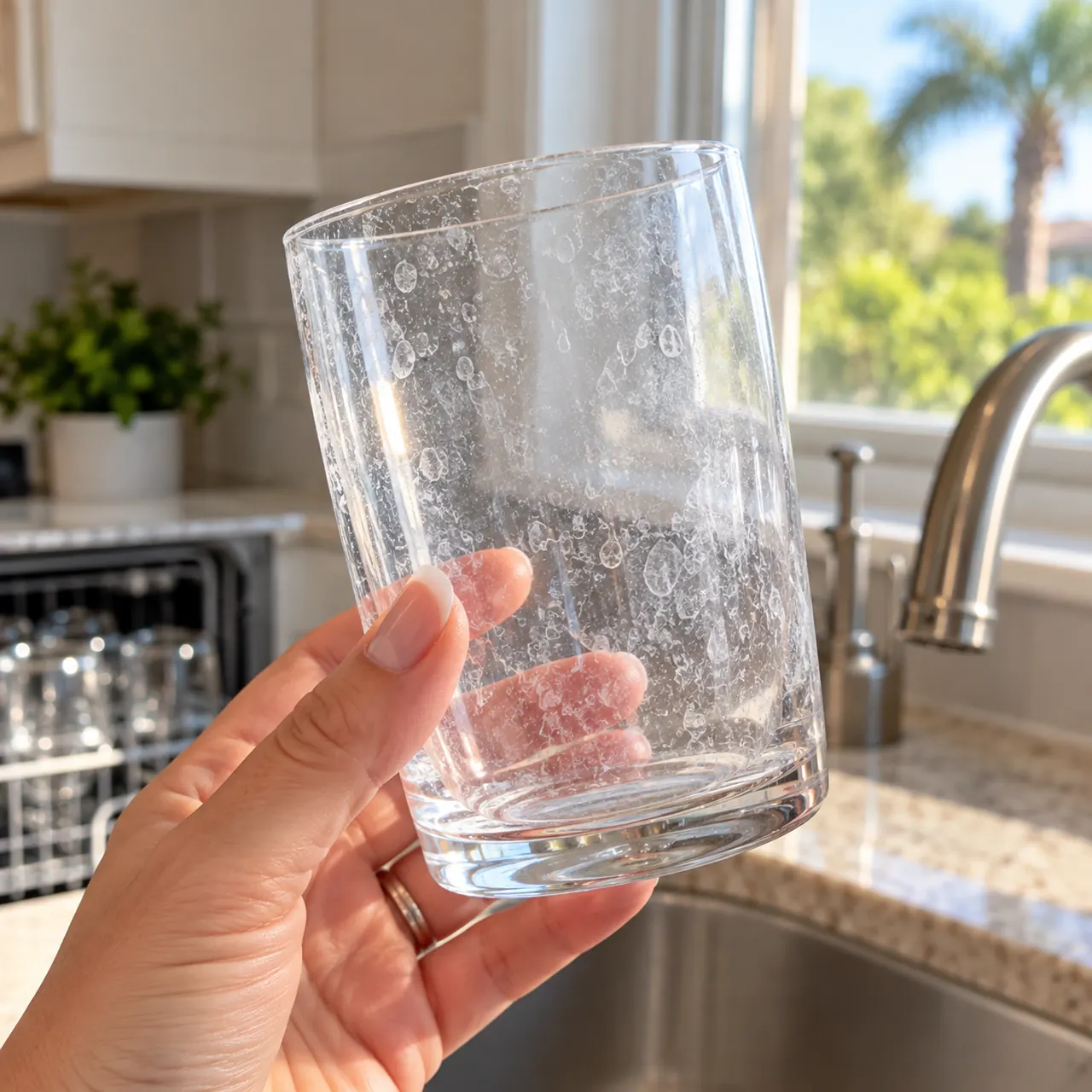
Cloudy glasses can come from hard water film, which cleans off, or etching, which is permanent. Here's a 5-minute vinegar test to tell them apart and how to prevent each one.

Key takeaways
- Soak a cloudy glass in undiluted white vinegar for about 5 minutes. If it clears, it was hard water film. If not, it's likely etching.
- Hard water film is mineral residue and can be removed and prevented.
- Etching is permanent surface damage; it can't be cleaned off.
- Rinse aid and correct detergent amounts help with both; reducing hardness addresses film at the source.
You pull clean glasses out of the dishwasher and they look foggy. Before you buy a new detergent or new glasses, figure out which problem you have. There are two common causes, and they need opposite fixes.
The 5-minute vinegar test
Iowa State University Extension suggests a simple check: soak a cloudy glass in undiluted white vinegar for about five minutes.
- It clears up: the cloudiness was hard water film, mineral residue that vinegar dissolves.
- It stays cloudy: the glass is probably etched, which means the surface itself is damaged.
If it's hard water film
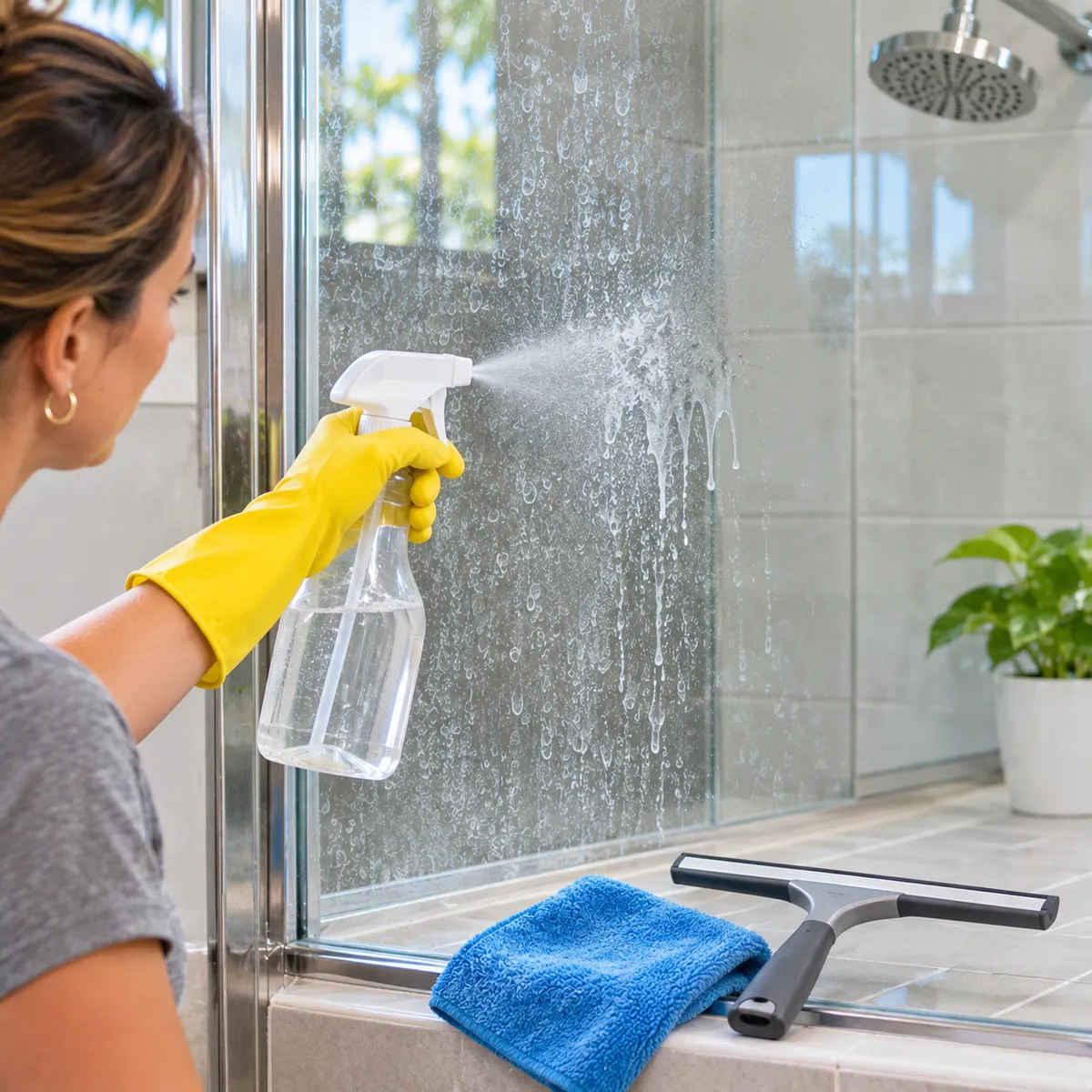
Hard water carries calcium and magnesium that can dry onto glassware, especially on the final rinse. Much of Tampa Bay's water is hard. (See hard water in Tampa Bay.) To fix it:
- Use a rinse aid every cycle.
- Use enough detergent for hard water; follow the detergent's guidance.
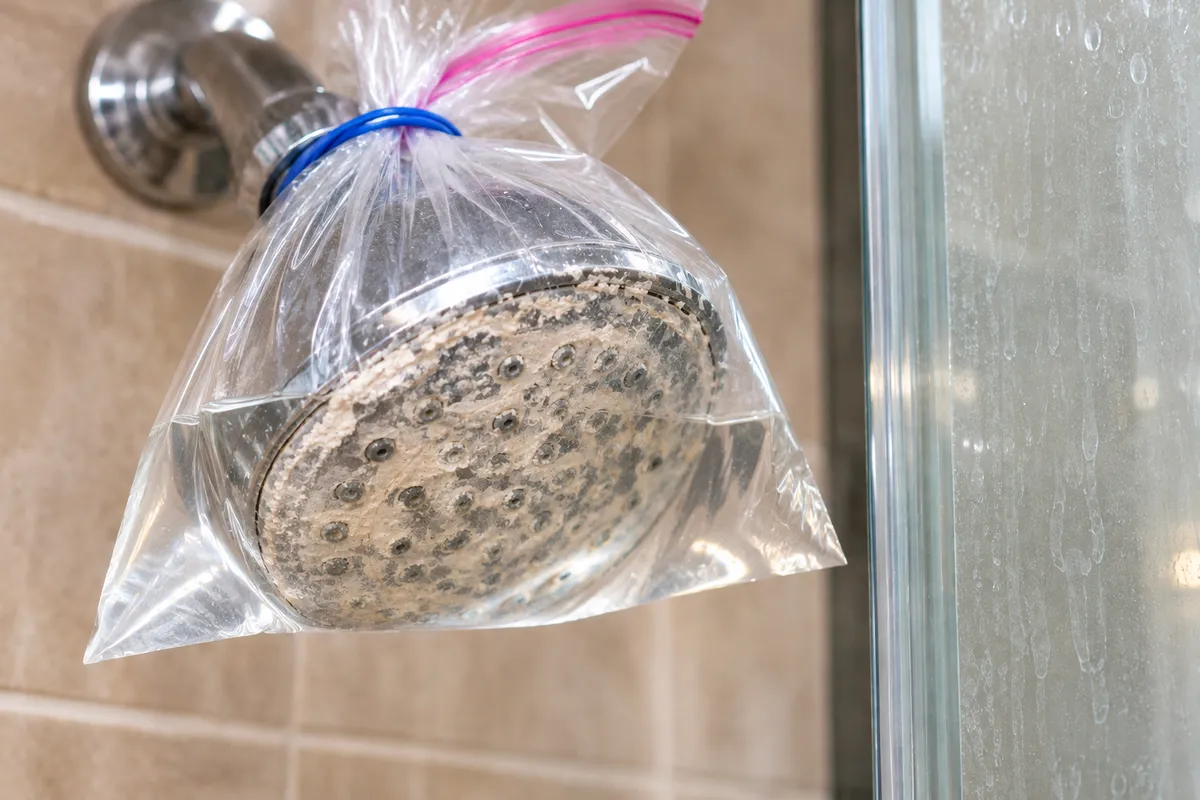
- Clean the dishwasher with a vinegar or manufacturer-approved cleaner cycle to remove buildup inside.
- Restore the glasses by soaking them in vinegar, then washing normally.
If it's etching
Appliance makers describe etching as permanent, tiny surface damage that leaves glass cloudy. Their guidance links it to a mix of factors such as too much detergent, very hot water, and soft water with light soil loads. To help prevent more:
- Use less detergent, especially with soft or softened water.
- Use a rinse aid and wash at a lower temperature setting if your dishwasher allows it.
- Hand-wash delicate or valuable glassware.
Etched glasses can't be restored, so prevention is the only option.
A note for softened-water homes
If you have a water softener, you'll usually need less detergent than before. Cutting back helps avoid etching and saves money.
Not sure what your water is doing?
Our free in-home water test measures hardness at your tap so you know whether film is a hardness problem. Call or text (727) 334-0333 anytime.
Frequently asked questions
How can I tell etching from hard water film?
Soak the glass in undiluted white vinegar for about five minutes. If it clears, it was hard water film. If it stays cloudy, it's likely etching.
Can etched glasses be fixed?
No. Etching is permanent surface damage. You can only prevent it from getting worse.
Should I use less detergent with soft water?
Usually, yes. Softened water needs less detergent, and too much detergent is linked to etching.
Sources
- Cloudy glassware? (AnswerLine), Iowa State University Extension and Outreach
- Etching or Cloudy Glassware, Whirlpool Product Help
- How to Help Prevent Etching on Glasses in Dishwashers, Maytag
We check local facts against official sources such as utility water quality reports and government notices. Spot something out of date? Text us at (727) 334-0333 and we'll fix it.