Water Tips
Chloramine, Skin and Hair: What We Know (and What We Don't)
Many Tampa Bay homes get chloraminated water. Here's what chloramine is, what health agencies say about bathing in it, why some people notice dry skin or hair, and practical options.

Key takeaways
- Chloramine is chlorine combined with a small amount of ammonia. Utilities use it because it keeps disinfecting longer as water travels through pipes.
- The U.S. EPA says chloraminated water that meets its standard is safe for bathing and showering.
- Some people report dry skin or hair; research hasn't settled how much water disinfectant contributes, and hard water can play a part.
- If you'd like less chloramine at the shower, carbon filtration is the tool designed for it.
If you've moved to Tampa Bay and your skin or hair feels different, you're not imagining that the water is different. Many systems here disinfect with chloramine, and much of the water is hard. Here's a plain look at what's known.
What chloramine is
Chloramines form when a small amount of ammonia is added to chlorine. According to the U.S. EPA, utilities have used them since the 1930s, more than one in five Americans drinks chloraminated water, and the main advantage is that chloramine keeps disinfecting longer as water moves through miles of pipe. Some utilities switched to it to help meet limits on disinfection byproducts. (See TTHMs and HAA5s explained.)
Not every town uses it. Find yours in chlorine or chloramine by Tampa Bay town.
What health agencies say about bathing
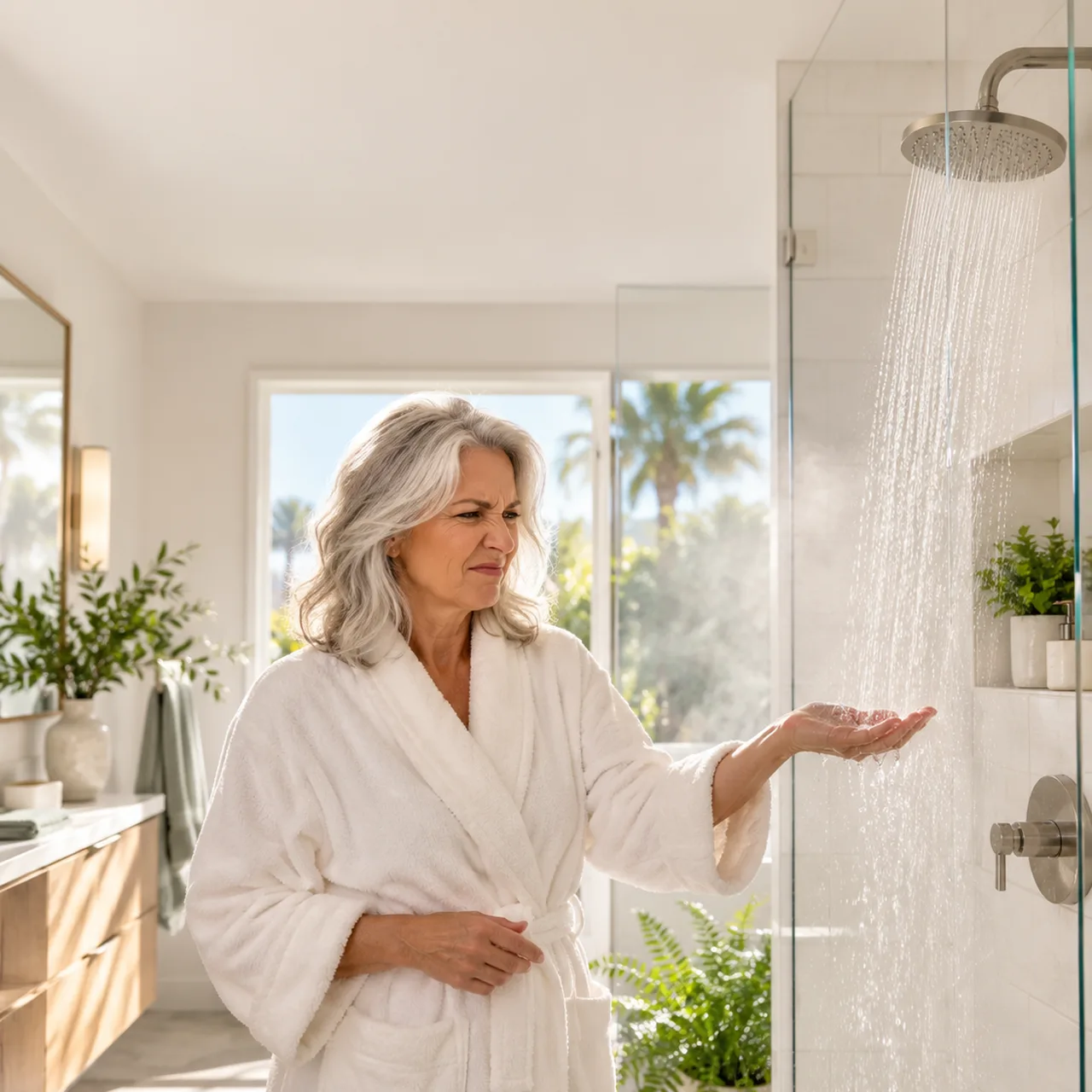
The EPA's answers to common questions about monochloramine say water that meets its standard is safe for showering and bathing, and that skin problems traced to disinfected water have typically been linked to swimming pools, where levels are much higher. The Virginia Department of Health gives the same guidance for drinking, bathing and laundry.
So the official answer is clear: normal tap water with chloramine is considered safe to bathe in.
Why some people still notice a difference
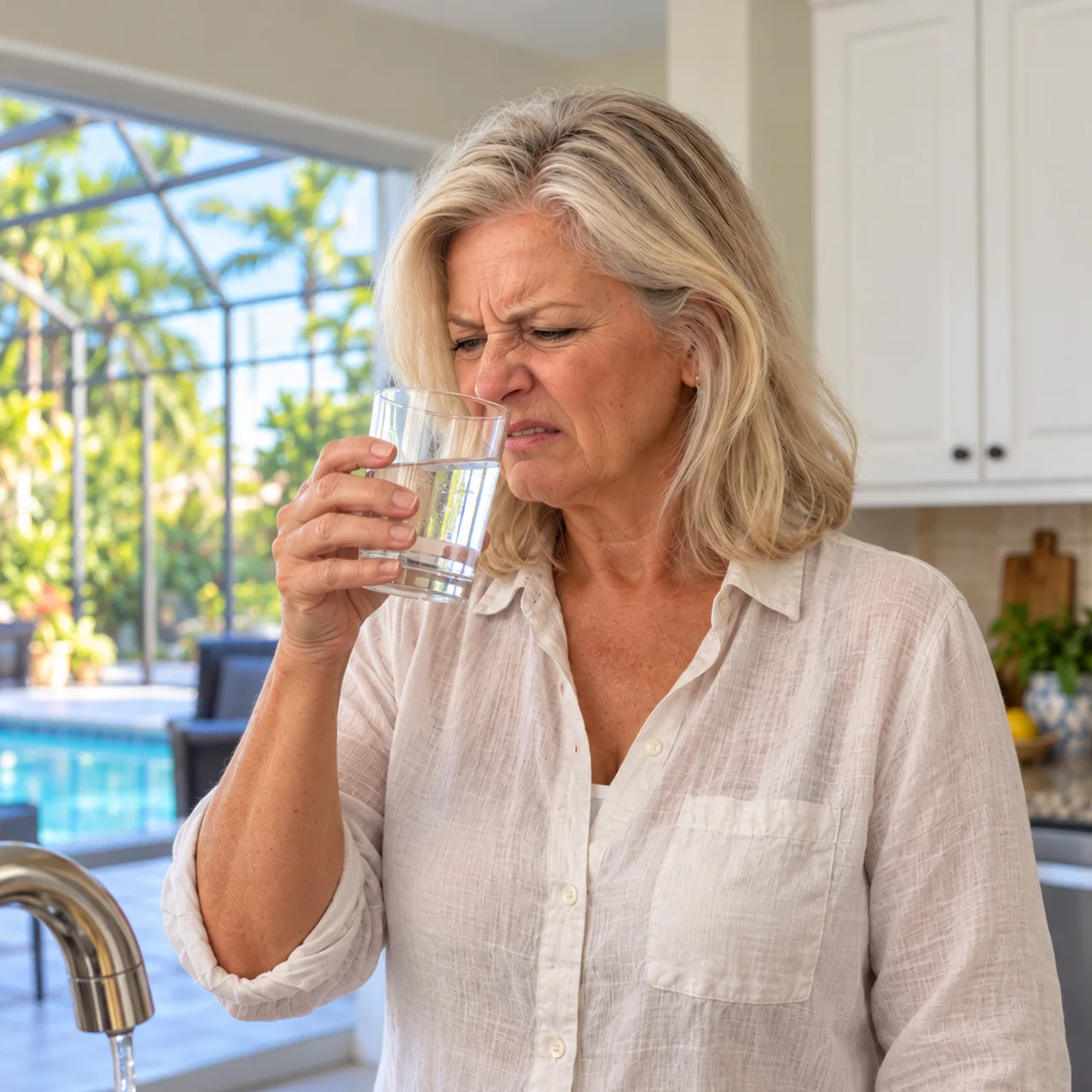
Some people do report that their skin feels drier or their hair feels rougher. Controlled research on everyday tap water and skin is limited, so it's fair to say the question isn't fully settled. A few things are worth knowing:
- Hard water is often part of it. Calcium and magnesium react with soap and shampoo, leaving a film and making lather harder to rinse. Many people describe that as "dry" or "squeaky."
- Hot, long showers dry skin regardless of what's in the water.
- Everyone is different. People with sensitive skin may notice changes others don't. A dermatologist is the right person for a skin condition.
Practical options
- Shorter, warm (not hot) showers and moisturizing right after.
- A clarifying shampoo now and then if hard water buildup leaves hair dull.
- Carbon filtration. Catalytic activated carbon is designed to reduce chloramine. A whole-home carbon filter treats every tap and shower. Our softener and carbon combo addresses chloramine and hardness together.
We don't make medical claims, and no water system is a skin treatment. What we can do is measure what's actually in your water. Our free in-home water test checks chlorine or chloramine and hardness at your tap. Call or text (727) 334-0333 anytime.
Frequently asked questions
Is it safe to shower in chloraminated water?
Yes. The U.S. EPA says chloraminated water that meets its standard is safe for showering and bathing.
Does chloramine dry out skin and hair?
Some people report it, but research on everyday tap water and skin is limited. Hard water and hot showers also contribute to that dry feeling.
Does a shower filter remove chloramine?
Chloramine is harder to reduce than chlorine. Catalytic activated carbon is designed for it. Check any filter's specific claims and certification before buying.
Sources
- Chloramines in Drinking Water, U.S. EPA
- Common Health Questions Related to Monochloramine, U.S. EPA
- Chloramines: Frequently Asked Questions, Virginia Department of Health
We check local facts against official sources such as utility water quality reports and government notices. Spot something out of date? Text us at (727) 334-0333 and we'll fix it.